1898–1899
The construction of this large building was linked to the growing popularity of the Domácnost association, which had previously been headquartered “at the Douš family’s” on Wenceslas Square and in the building of the First Prague Insurance Company on Spálená Street. During the subdivision of the Trinitářské Barracks block, the thriving association purchased two lots on Lazarská Street, which, when combined, provided a sufficiently large building site. The plans were drawn up by the firm Stark and Gregor, which, however, was reluctant to undertake the construction itself; thus, the plans were assigned to Josef Blech and his Karlín-based firm.
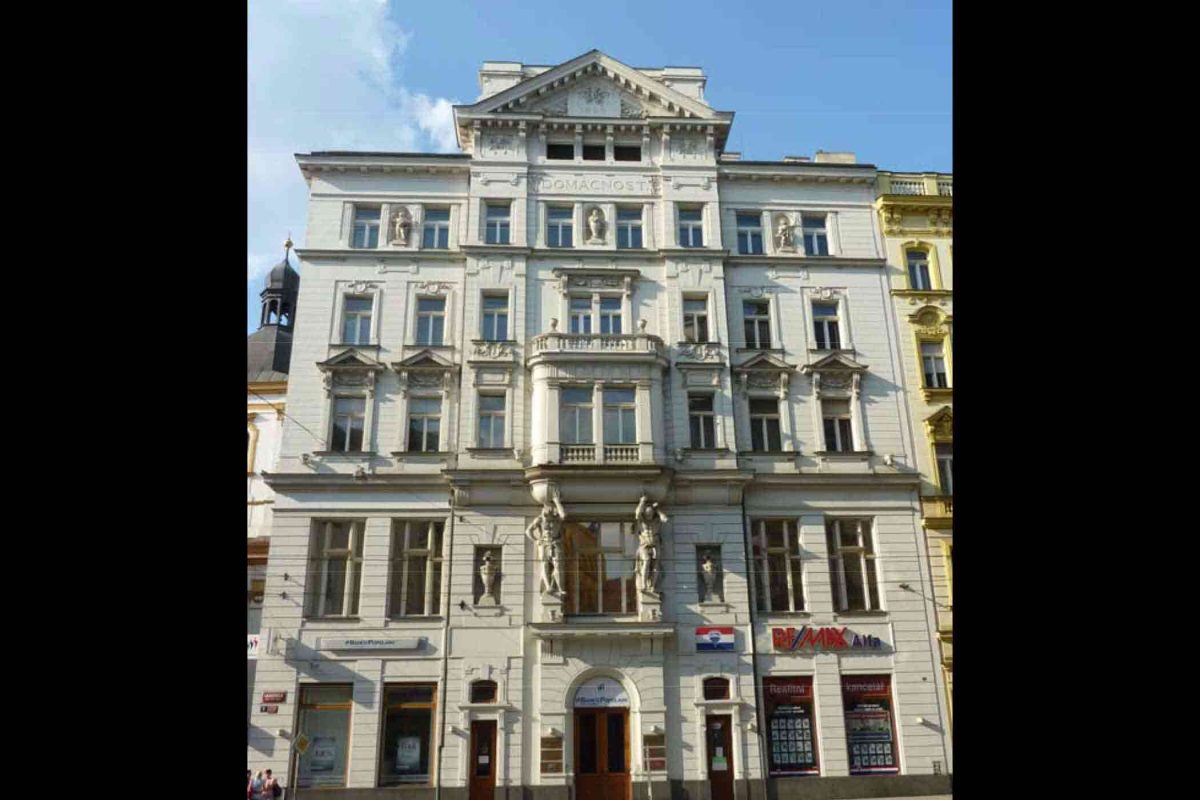
Blecha partially revised the plans, while retaining the building’s overall layout. However, the facade was altered to accommodate the new arrangement of windows openings and entrances. In addition to utility rooms, the community center also contained representative spaces and a residential section for the association’s residents and staff. The household was the last work of Josef Blecha, who died that same year at the age of 59 years of age.
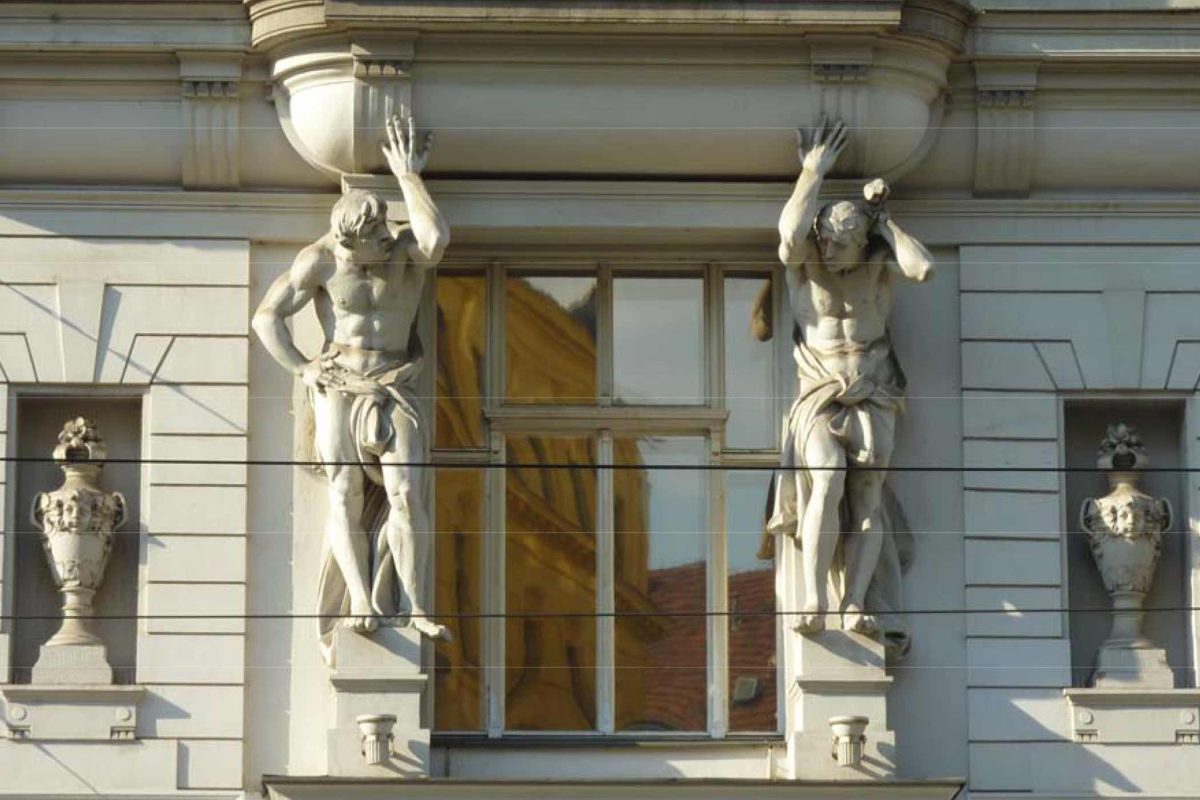
According to the press of the time, the facade is “designed in calm, well-considered forms of the modernizing Renaissance, with a view to ensuring that such an important and distinguished association (…) is represented with dignity on the outside as well.” The main sculptural feature of the facade are the large Atlanteans supporting the projection in the center of the building. They were created by Josef Pekárek. These masterfully crafted, powerful figures in elegant contrapposto pose are very striking. It is interesting to look at their faces, which are adorned with sophisticated mustaches; even the hairstyles of both men look modern, giving the impression that these are not mythical Atlanteans, but young men of the contemporary world. The top floor of the building is adorned with putti; on the main facade, we find two, while another two rest on the side facade. Each pair consists of a pair of a boy and a girl with cooking motifs: the boy putto wears a chef’s hat, a frying pan, and a wooden spoon, while his counterpart is a girl with a headscarf and a goose ready for plucking.
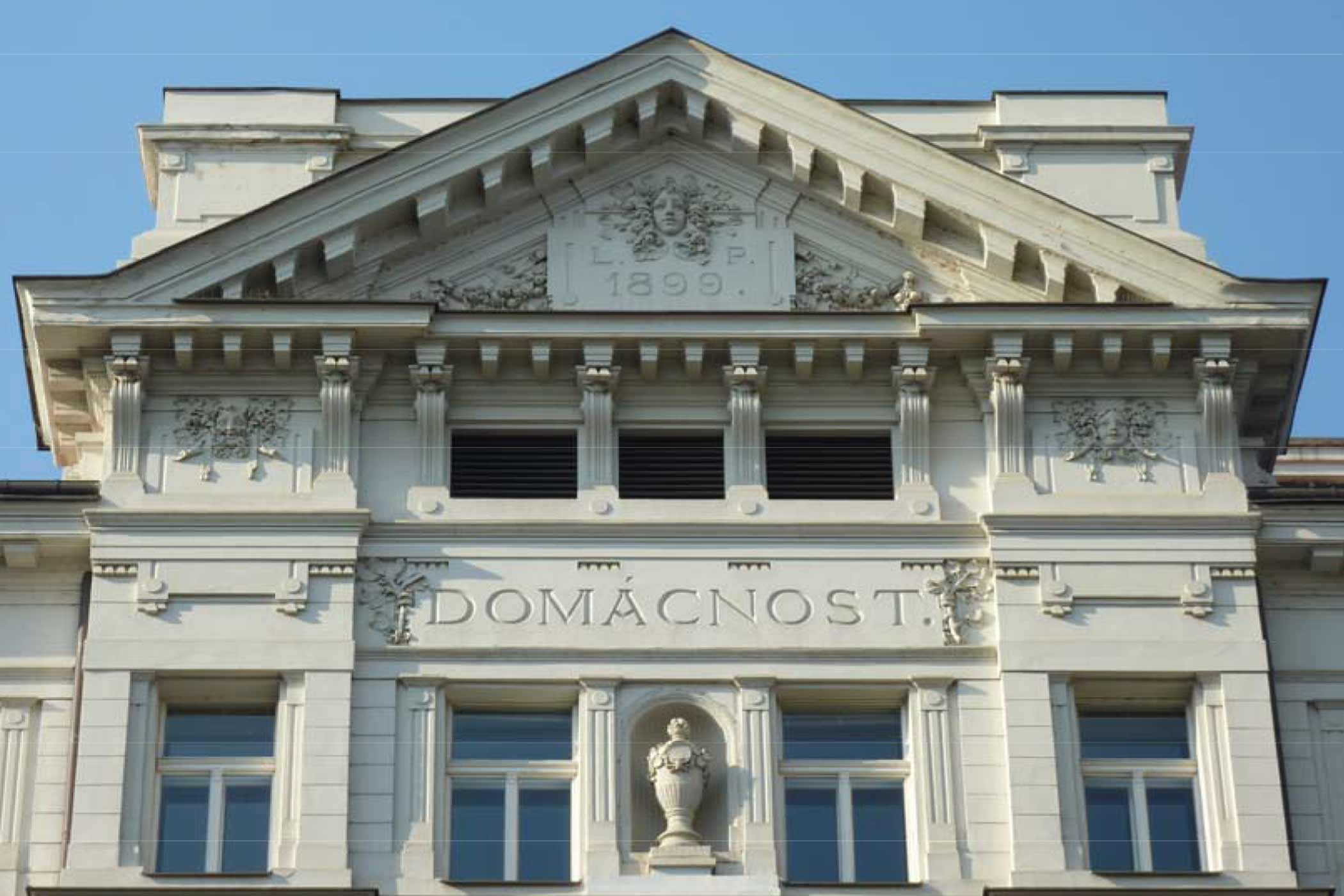
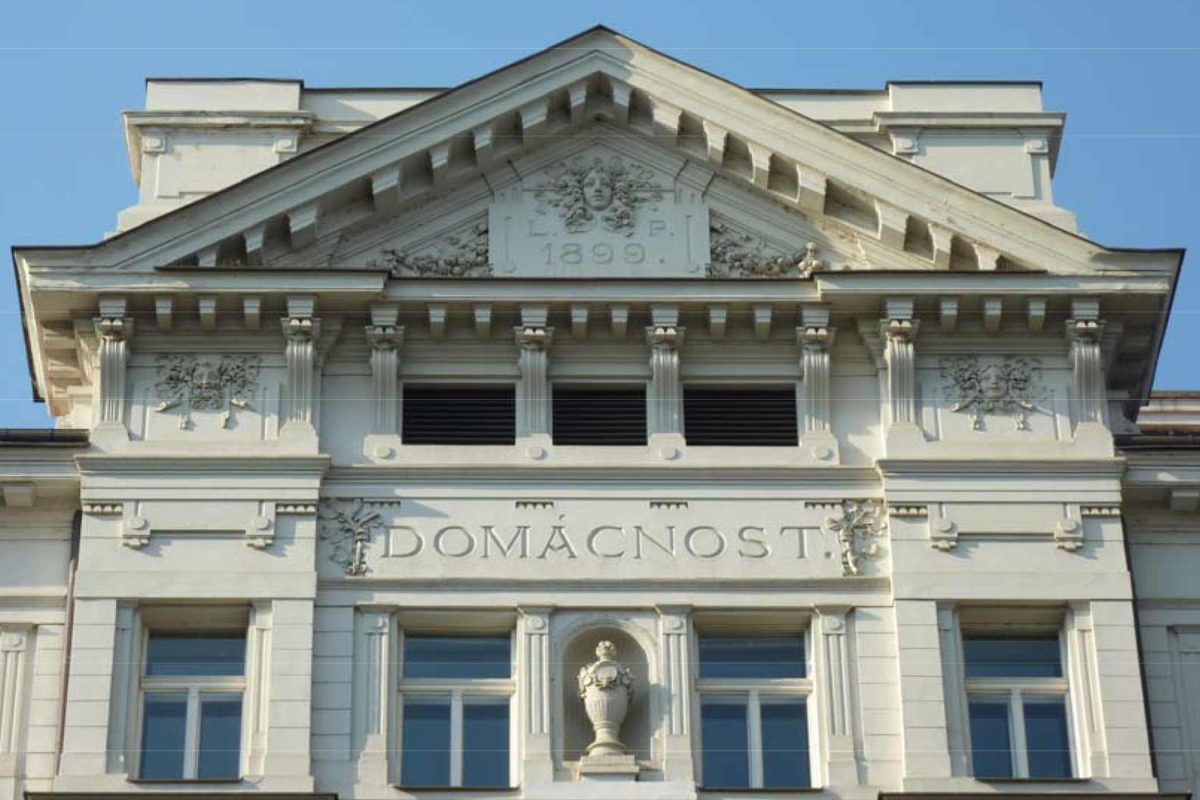
Above the top floor and the rectangular panel bearing the inscription “Domácnost” is a triangular gable bearing the date 1899 and a female mascarone. Two additional mascaroneswith rich decor of plants and fruit are located on either side of the gable. Of the three mascarons, the most interesting the male one, representing the god Dionysus. While both female mascarons are entirely stereotypical (and nearly identical), Dionysus is convincingly portrayed as a roaringly laughing male face with half-missing teeth and a broad nose. The fruit and floral festoons in the gable, as well as several jardinières featuring a motif of a child, are the fruit and floral festoons in the gable, as well as several jardinières featuring a child’s faces, which are regularly spaced across both the main and side facades. Pekárek and Novák did excellent work on this facade and proved themselves to be a well-coordinated team. In doing so, they undoubtedly enhanced the reputation of their newly founded firm and likely thereby opened the door to further prominent commissions.