
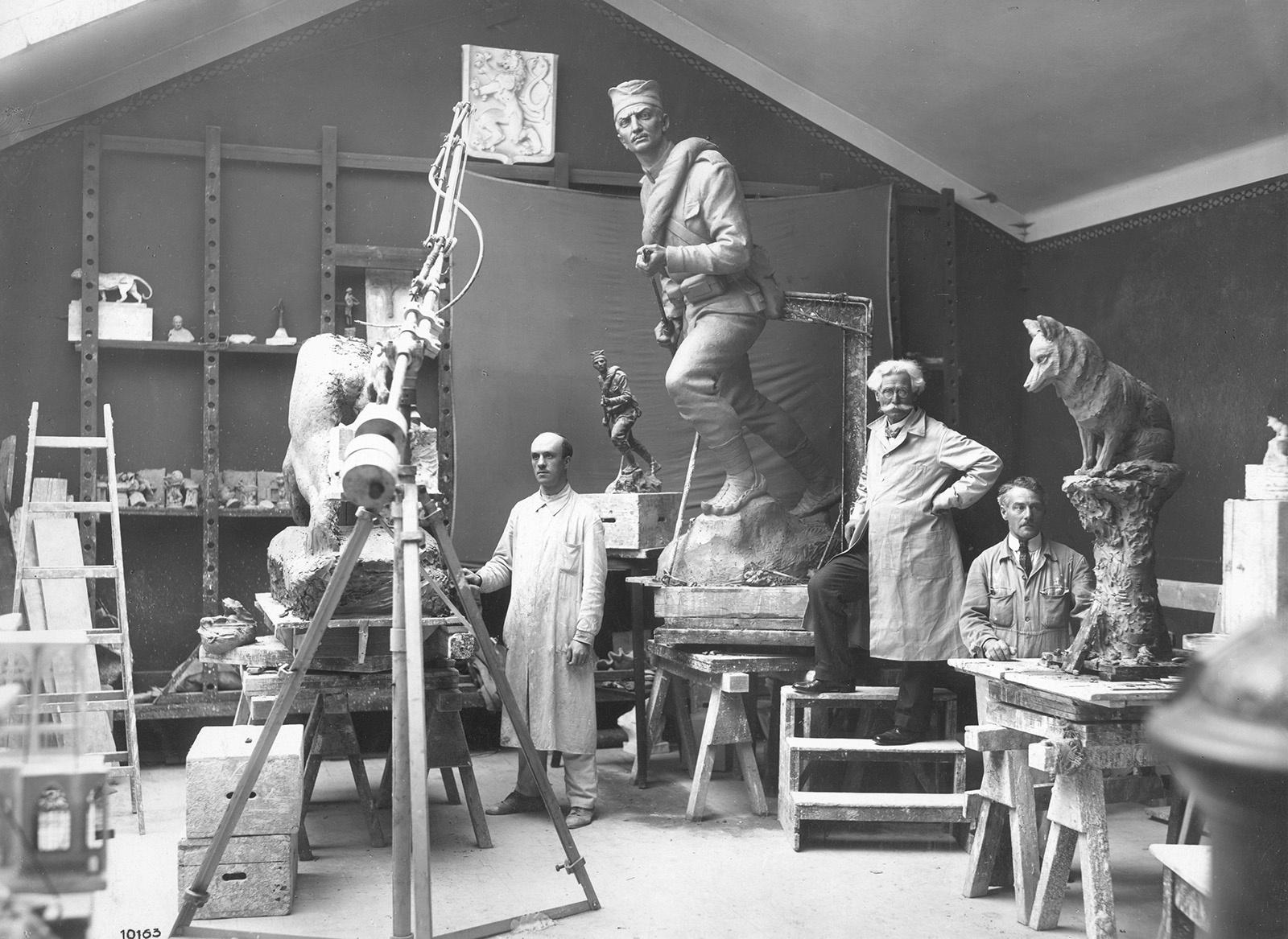
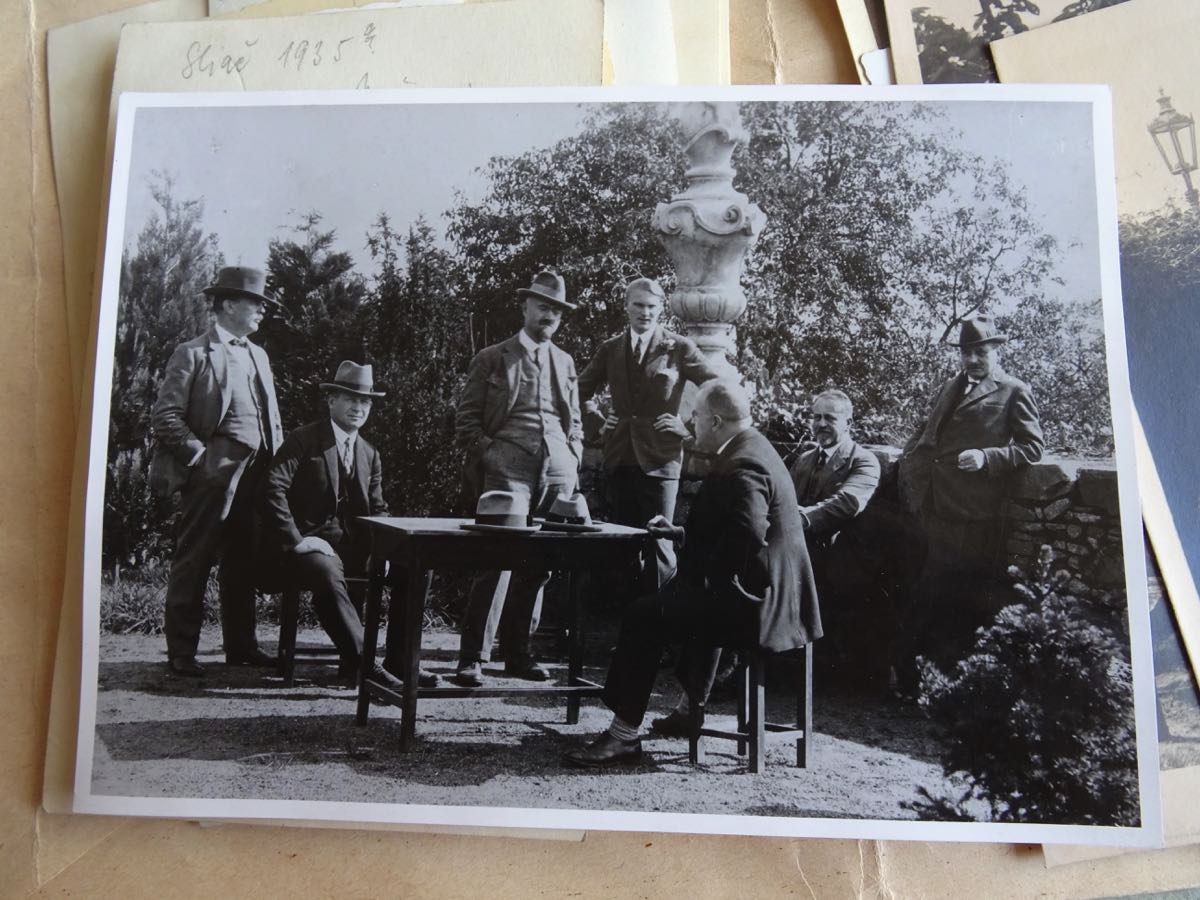
In 1924, Novák purchased a plot of land from the Vyšehrad Chapter at the foot of the southern slope of the Nusle Valley (between Čiklova Street and the railroad tracks), on which he built a new sculpture studio that same year. In the building, which also included a caretaker’s apartment, he set up a spacious studio with northern light and several technical workshops. At his new studio, he primarily worked on models for large figurative designs; he was one of the first sculptors in the country to use a pantograph (a device consisting of articulated rods that allows dimensions to be transferred on an enlarged or reduced scale) to create them. Among Novák’s significant commissions from this period are, for example, a larger-than-life plaster reproduction of Bohumil Kavka’s 1924 bust of Antonín Švehla and an artificial stone reproduction of Josef Václav Pekárek’s 1927 allegorical statue of the Vltava River, which both sculptors presented at an exhibition of contemporary art in Brno on the occasion of the tenth anniversary of the founding of the republic in 1928.
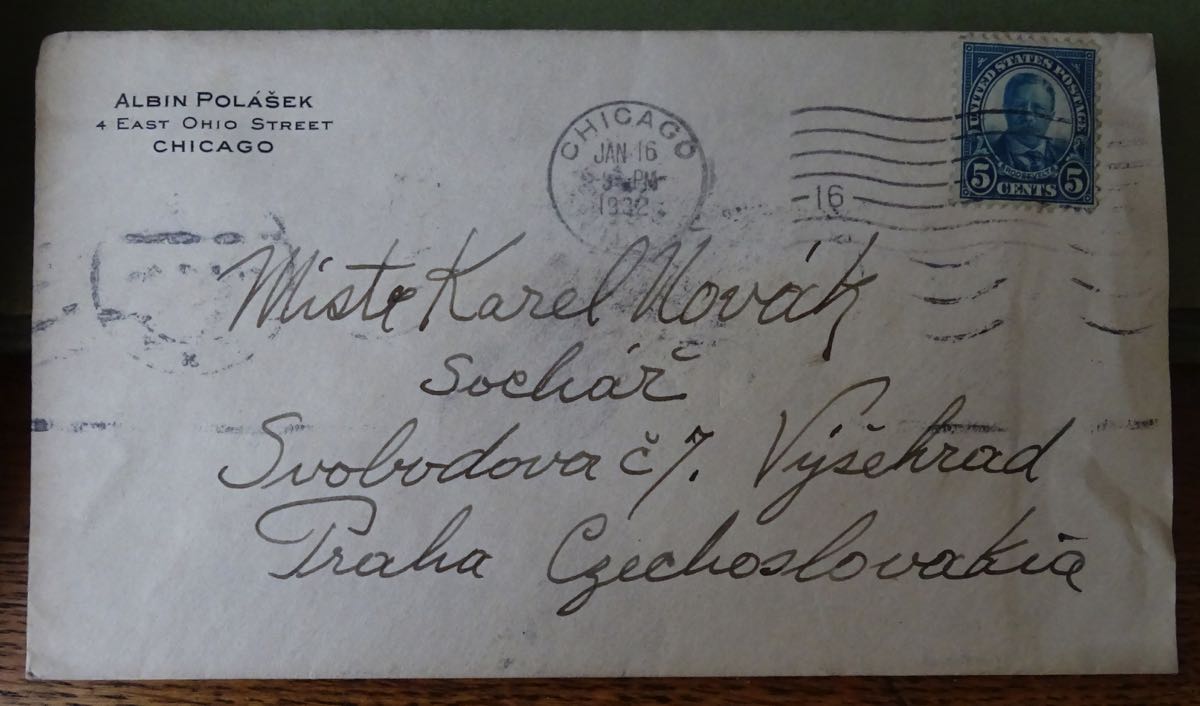
He created models for a number of other artists, which were subsequently used to create sculptures; for example, he created a model of the figure *The Resting Plowman* for sculptor Jakub Obrovský (installed in 1926 in Chlumec nad Cidlinou), a model of the statue of Woodrow Wilson for the Czech-American sculptor Albín Polášek (installed on the edge of the park in front of what is now the Main Railway Station in 1928, removed in 1941), and a model of the statue of Radegast (unveiled at Radhošť in 1931); and for sculptor Karel Dvořák, a model of the seated figure of Ernst Denis (installed on Malostranské náměstí in 1928, removed in 1940).
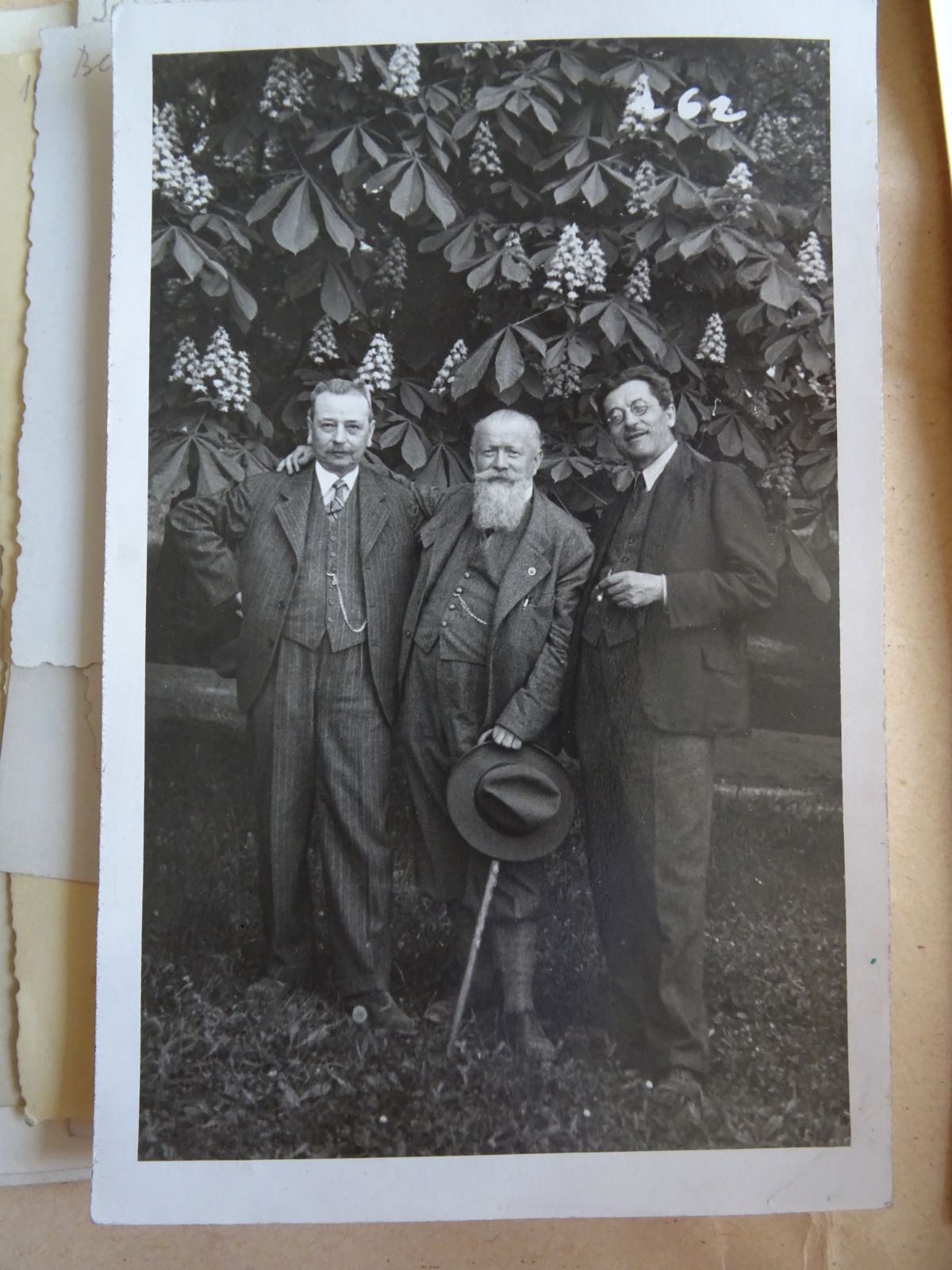
Among his prestigious commissions was a model of a memorial to the fallen citizens of Prague for sculptor Josef Mařatka and architect Bohumil Hypšman (completed in the park on Palackého Square in 1932, removed in 1940) and models of the statues of the poet Vuko Karadžić and The Wounded Soldier for the Serbian sculptor Vladimír Jovanović (from the mid-1930s). Novák carried out most of this work in close collaboration with sculptors, including, for example, Josef Drahoňovský, Emanuel Kodet, and Vít Španiel. In addition to a considerable volume of reproduction work, which also included numerous copies of historical sculptural monuments, Novák was also engaged in the interwar period in preparing designs for his own sculptural works, the most extensive of which was to have been the Stations of the Cross from Příbram to the church at Svatá Hora, consisting of life-size stations. The Second World War prevented the realization of this project.
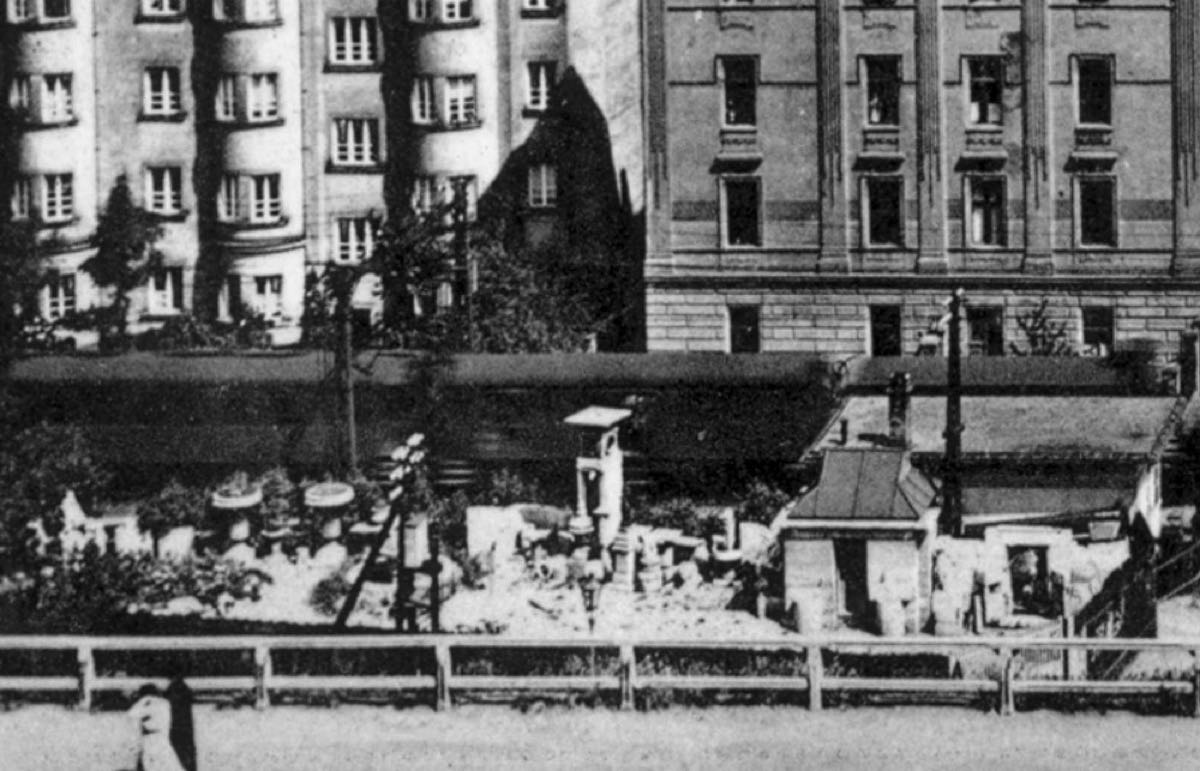
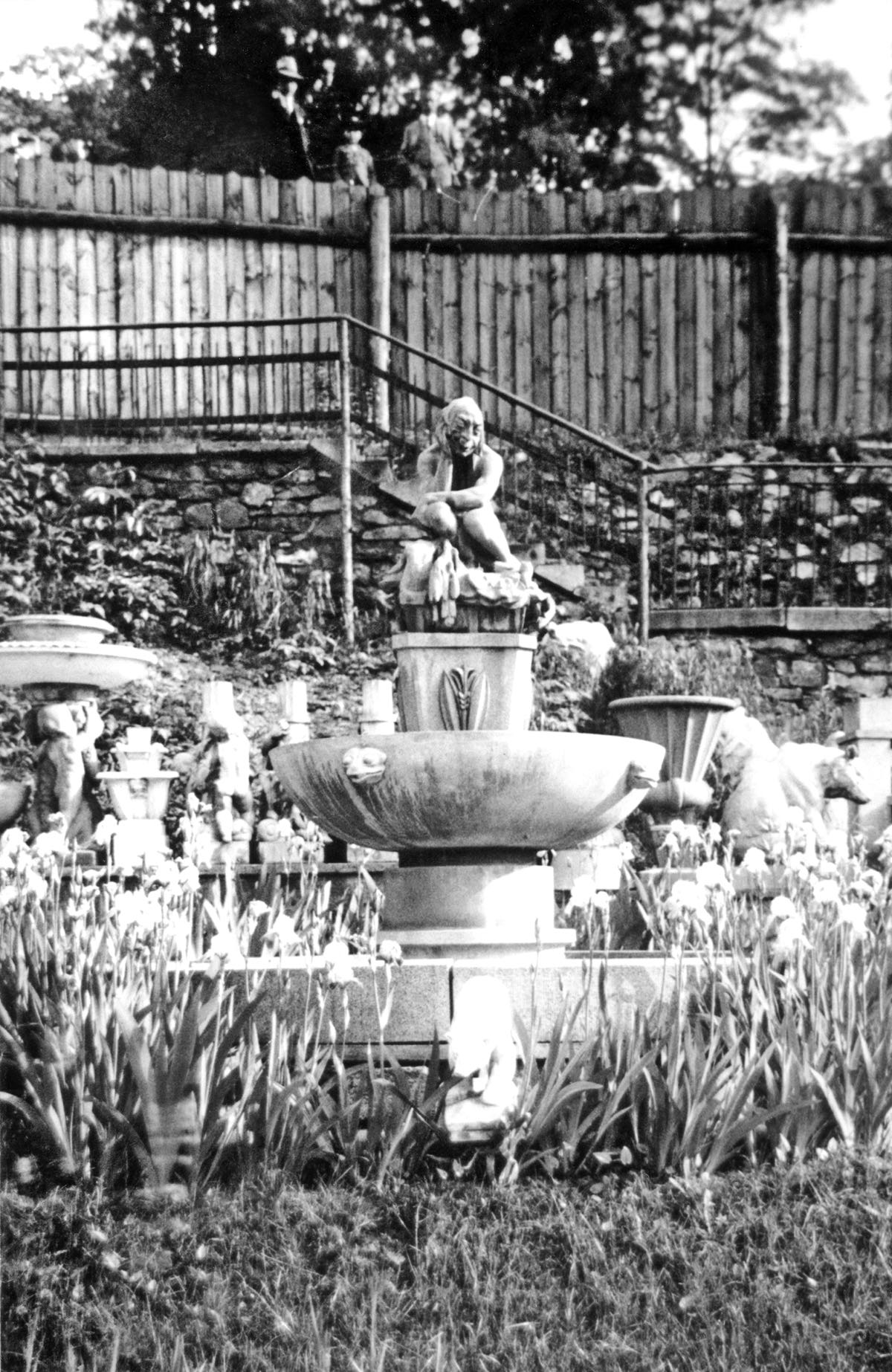
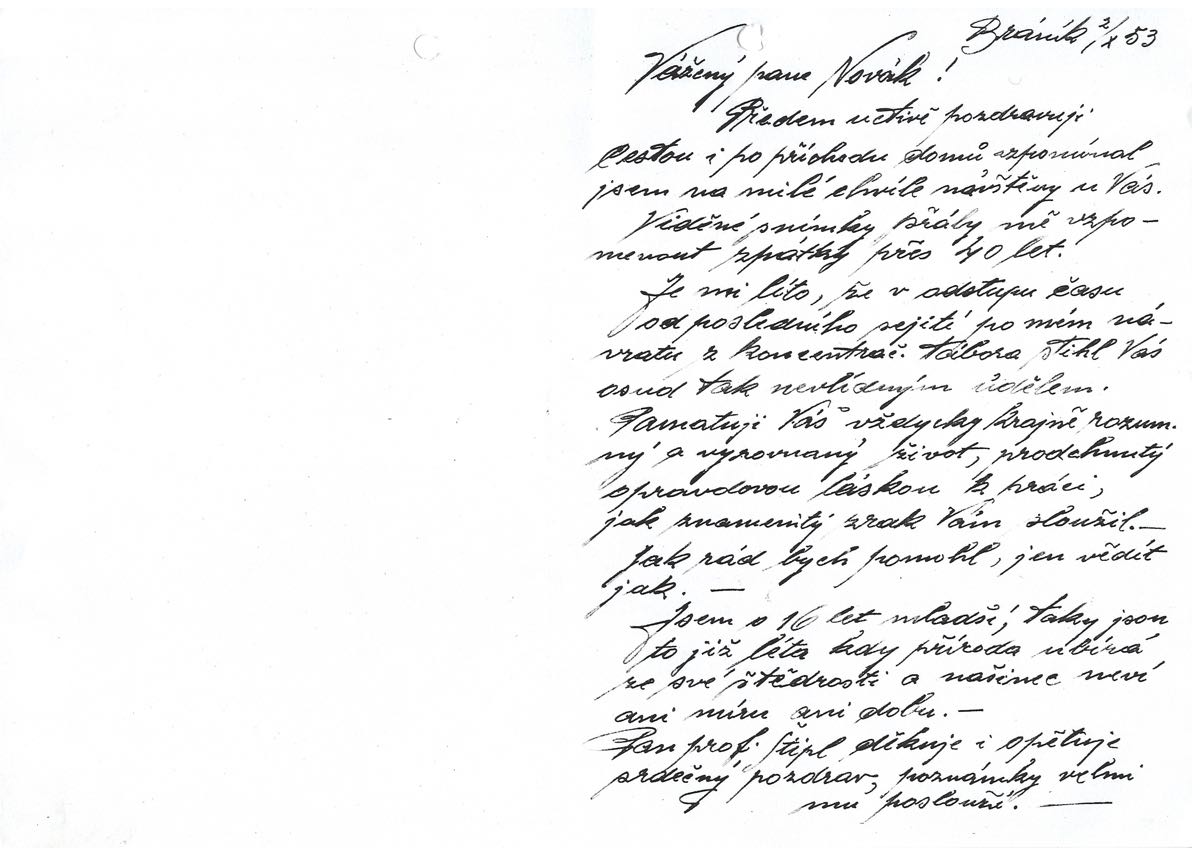
Novák’s art studio, known as “Sochařství K. Novák,” operated until 1949, when, following the communist coup, all private enterprise in the field of artistic creation was prohibited by law. Novák was seventy-seven years old at the time; shortly after his studio was shut down, he was struck by a serious eye disease that left him completely blind. He died in 1955, just short of his eighty-fourth birthday, and was buried at Slavín in Vyšehrad. Although he was not among the leading figures of Art Nouveau sculpture—such as František Bílek, Bohumil Kafka, Quido Kocián, Josef Mařatka, Stanislav Sucharda, Ladislav Šaloun, or Jan Štursa, he made an irreplaceable contribution to the overall development and stylistic diversity of Art Nouveau during the first two decades of the 20th century through the extensive work of his studio. Through his own work—which tended primarily toward stylized elements, linear and undulating ornamentation, and monumentalization—he uniquely complemented and modified the fundamental tendencies of Art Nouveau sculptural expression. Novák’s modest contribution to the style of Czech Art Nouveau decorative sculpture was not identified by art historians until the late 20th century.
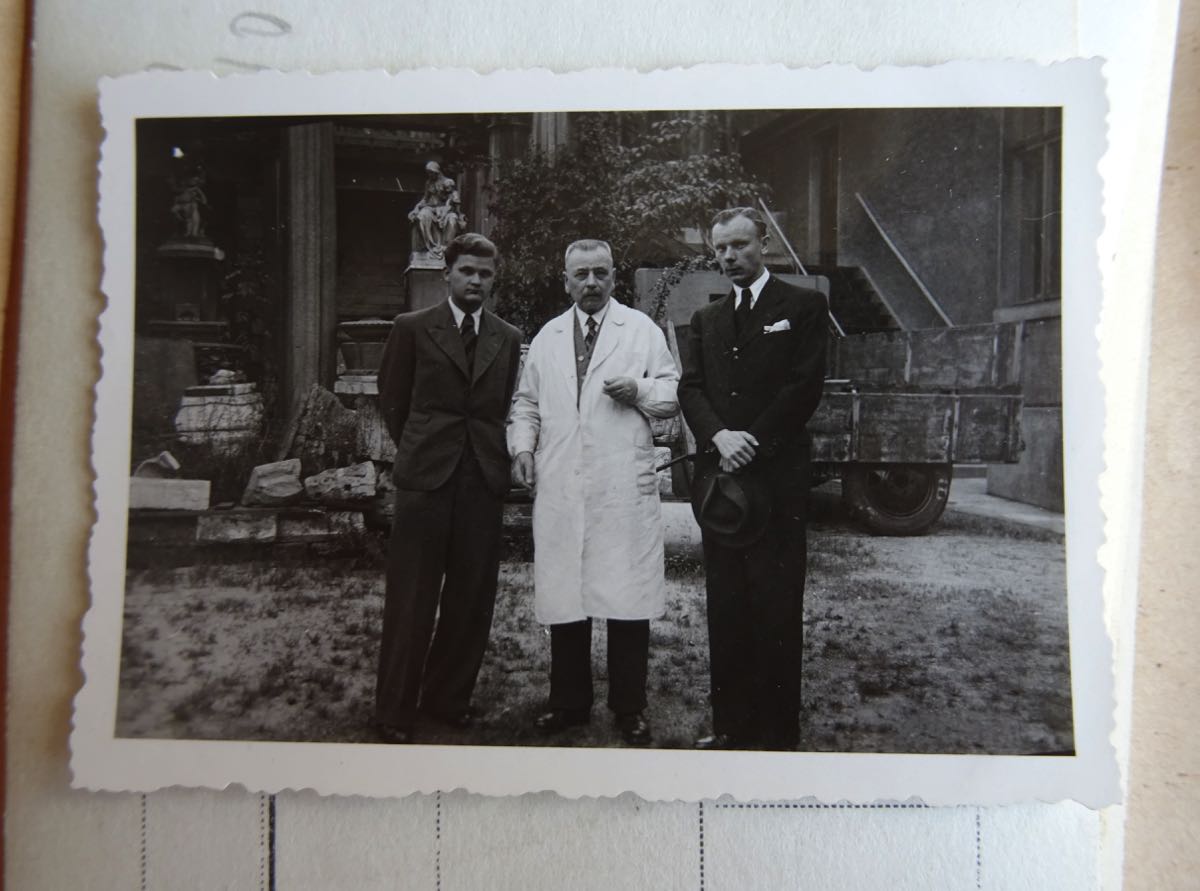
The closure of Novák’s private sculpture studio (Čiklova 13a, Prague 2 – Nuselské údolí) subsequently led to its nationalization. Shortly after 1950, one of the divisions of the state-owned enterprise Krátký film Praha was granted use of the former studio building, which it occupied until the early 1990s, when the building and the land were returned to their original owners; members of Karel Novák’s family then sold the entire property. The new owner of the studio became the builder Vojtěch Haluza, who established the administrative headquarters of his company, Unista Haluza s. r. o., on the premises. Builder Haluza approached the entire property as a historic site, one whose original purpose reflected a significant era of Czech decorative art in the first half of the 20th century. While preparing the site, he discovered a number of damaged and undamaged sculptural artifacts originating from Novák’s studio; by subsequently installing them on the studio’s newly landscaped grounds, he laid the foundation for a lapidarium commemorating both the sculptor Karel Novák and the history of his art studio, with which the work of many sculptors and architects had long been associated.
(Prepared by: P. Š., April 2008)
Compiled based on sources and literature:
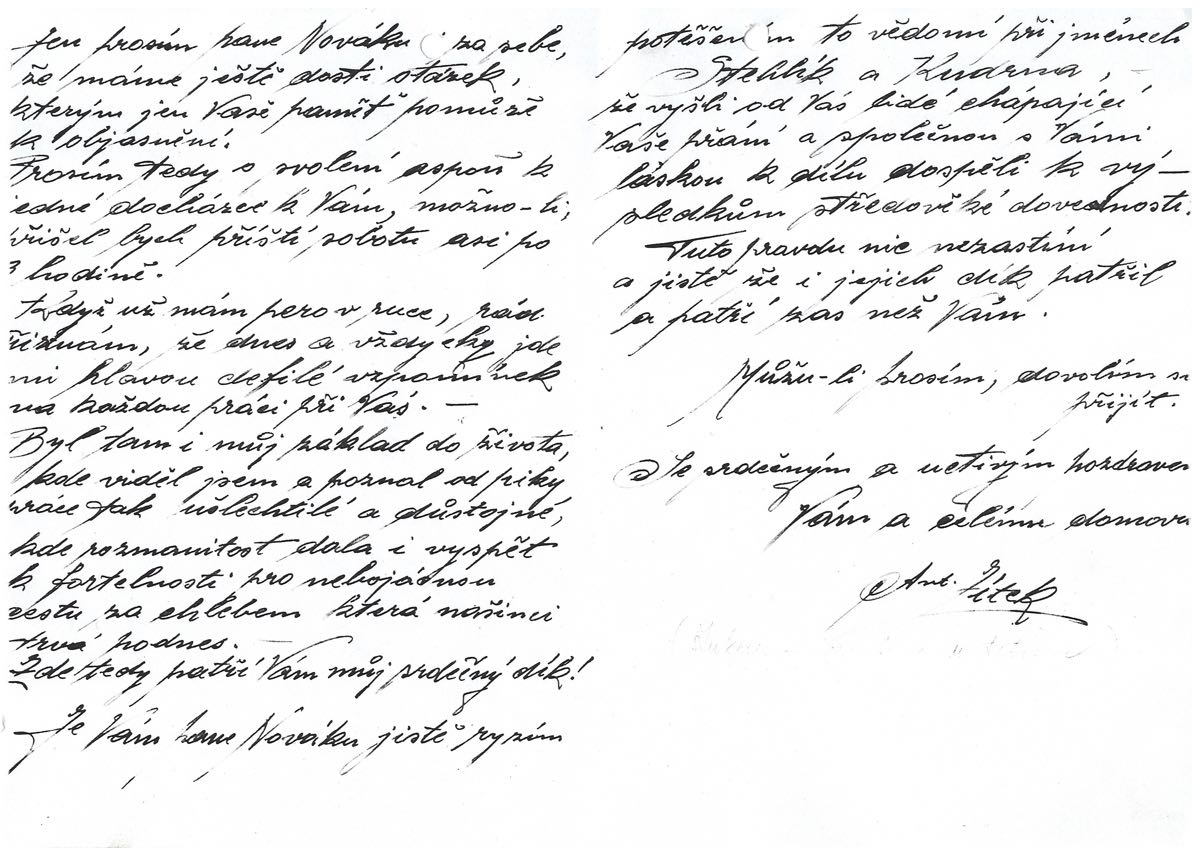
Extracts from the birth register, Roman Catholic Parish Office in Lysice, Vol. VIII, pp. 157, 198, 227, 317, and 370 (Moravian Provincial Archives in Brno, 2008); Catalog of the Works of Sculptor Karel Novák (compiled by Antonín Zítek in collaboration with K. Novák, manuscript, Prague 1953); Jaroslav Benda, Otakar Novotný, and Jaromír Pečírka (eds.): Fifty Years of the State School of Applied Arts in Prague, 1885–1935, Prague 1935; Prokop Toman (Sr.): New Dictionary of Czechoslovak Visual Artists, Vol. 1–2, 3rd ed., Vol. 1: A–K, Prague 1947; Vol. 2: L–Ž, Prague 1950; Dušan Riedl: Modern Architecture in Brno, 1900–1965, Brno, 1967; Jaroslav Bránský: Visual Artists in the Blansko District, Blansko, 1990; Petr Wittlich: Sculpture of the Czech Art Nouveau, Prague 2000; O. E. Vejskal: Small Sculptures of Physical Education Organizations 1–4, Prague 2002 (1–3) and 2004 (4); Martina Pachmanová and Markéta Pražanová (eds.): Academy of Arts, Architecture, and Design in Prague 1885–2005, Prague 2005; Petr Haimenn: Dictionary of Designers and Makers of Coins, Medals, Plaques, Decorations, and Badges Related to Bohemia, Moravia, Silesia, and Slovakia (1505–2005), Prague 2006.
Glossary:
Terracotta: a porous material made of fired clay, usually brick-red or brown in color, used to create small sculptures and architectural details.
Relief: a sculpture that protrudes above the surface or is flush with the surface.
Sgraffito: a technique for decorating walls by scraping away the top layer of wet plaster down to the substrate.
Ornament: stylized decoration based primarily on natural motifs.
Sculpture: a work of sculpture, a statue, or a relief featuring figurative or ornamental motifs.
Cartouche: a decorative element featuring a symbol, emblem, or coat of arms.
Mascaron: a sculptural human or animal mask on windows or doors.
Putto: a painted or sculpted depiction of a nude child, most often as a winged cherub.